On this page
01. What changes02. Why it matters03. Step by step04. Where it goes05. In stock now06. Get a free survey07. FAQ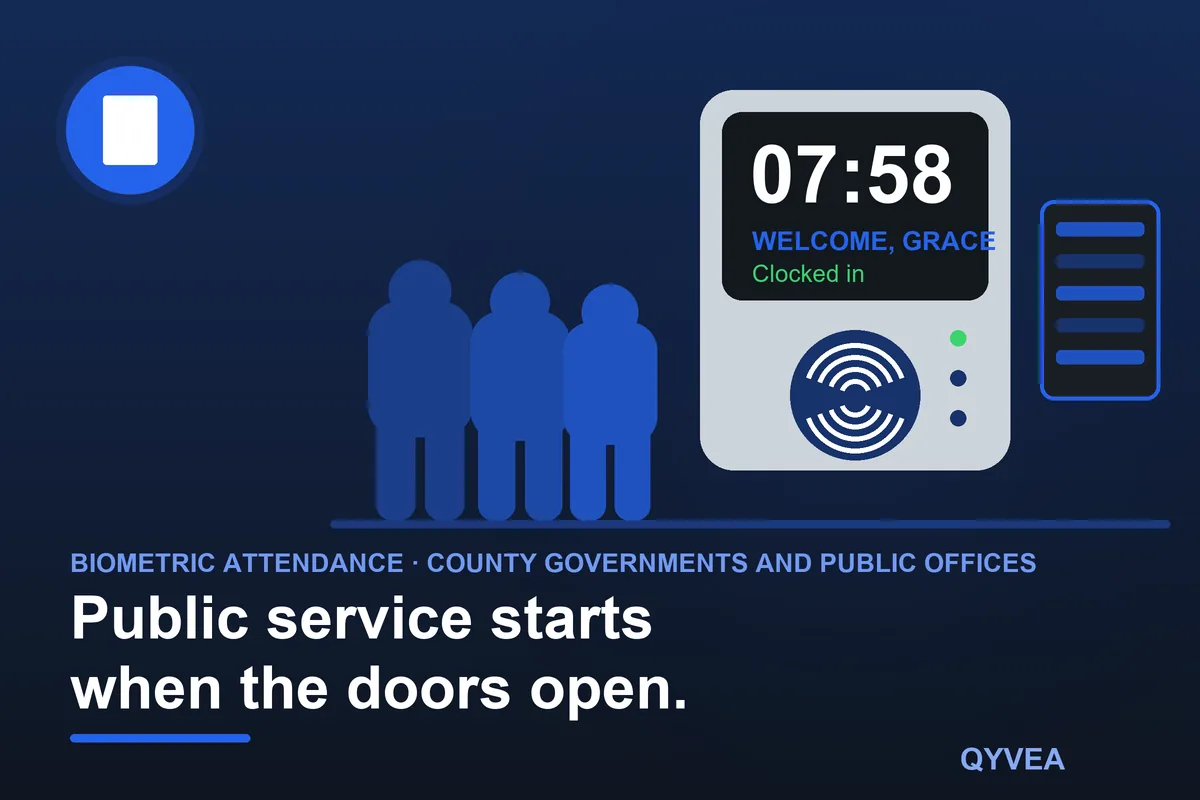
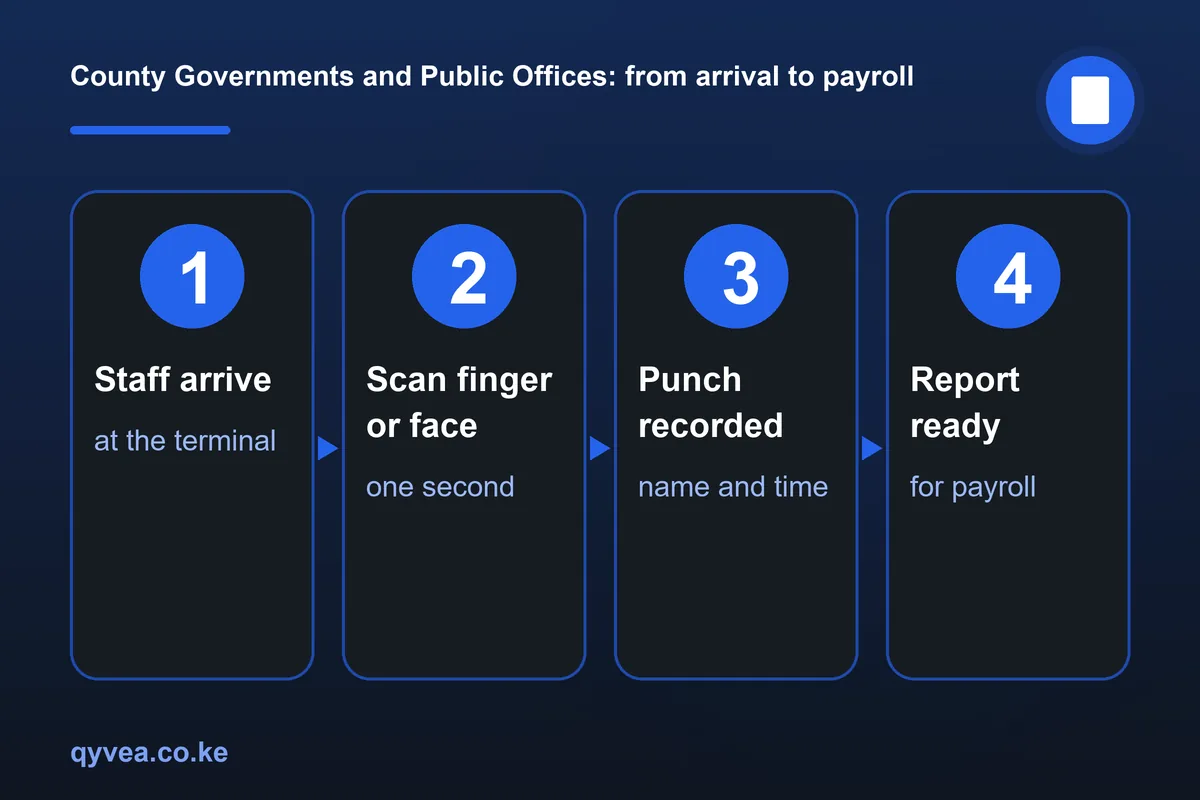
Public service starts when the doors open. A biometric attendance system (also called a fingerprint attendance machine or time attendance system) records who arrived, and when, with their own finger or face. For county governments and public offices, that means officers recorded at every office, and absence and lateness visible to managers.
Key takeaways
- Officers recorded at every office
- Absence and lateness visible to managers
- Reports ready for performance reviews
- Qyvea supplies, installs and trains your team.
01What changes
On paper or a basic clock
With attendance terminals
02Why it matters
03Step by step
04Where it goes
05In stock now
06Get a free survey
07Frequently asked questions
Can it cover many offices?
Yes. Terminals at each office report to one system.
Can it handle thousands of staff?
Yes, with the right terminals and server. We plan it on the survey.
Does it work with a weak network?
Terminals store punches and sync when connected.
Can staff cheat it?
A fingerprint or face belongs to one person, so nobody can clock in for a friend the way they can on paper.
Can it feed payroll?
Yes. Reports export hours, lateness and overtime for your payroll team.
Is biometric attendance legal in Kenya?
Yes, with care. In Kenya the Data Protection Act, 2019 treats biometric data as sensitive personal data, so tell staff why you collect it, store it securely and use it for attendance only. This is general information, not legal advice.
How many staff can one terminal hold?
Models hold from hundreds to several thousand fingerprints or faces. We pick the size from your headcount on the survey.