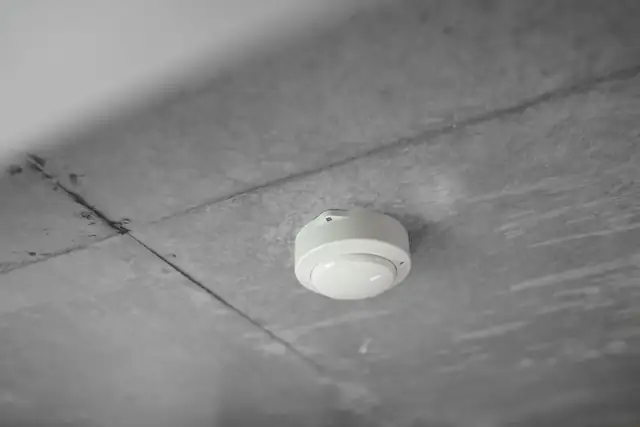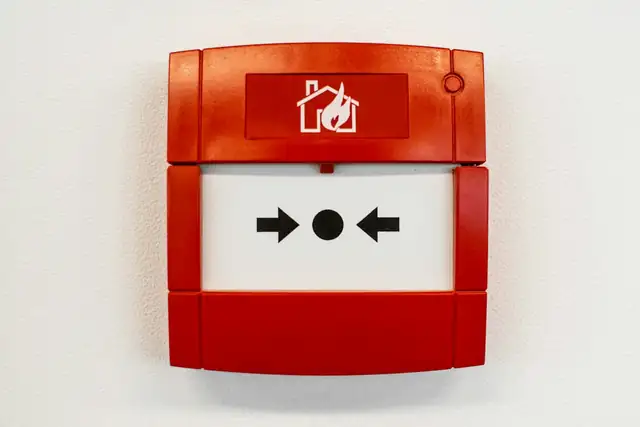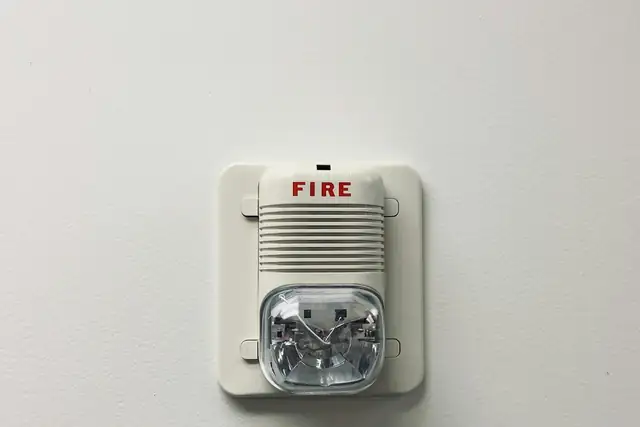
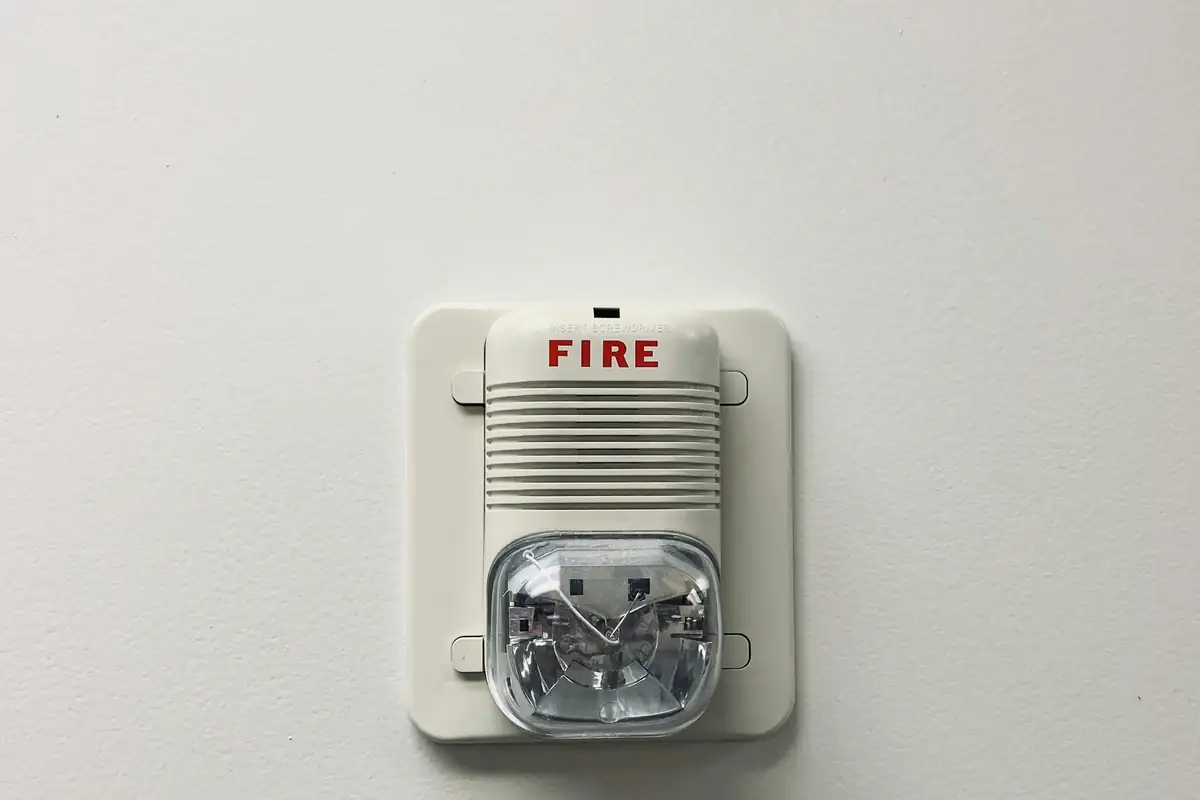
A fire alarm system has inputs (automatic detectors and manual call points), a control panel that decides what to do, and outputs (sounders, beacons and links to other systems). The panel runs on mains power with standby batteries, and shows which zone or device triggered the alarm.
Key takeaways
- Inputs: smoke/heat detectors and manual call points.
- The panel decides and shows where the alarm came from.
- Outputs: sounders, beacons and links (e.g. door releases).
- Standby batteries keep it working in power cuts.
- Regular testing is part of owning a fire alarm.
01How it fits together
02The parts
03Zones and cause-and-effect
Detectors and call points are grouped into zones (or given individual addresses), so the panel shows where the alarm started. 'Cause and effect' is the programming that says what happens next: which sounders operate, which doors release, whether a notification is sent.
Compare panel types in conventional vs addressable, and plan with the fire alarm planning guide.
04Frequently asked questions
How does a fire alarm know where the fire is?
Devices are grouped into zones or given individual addresses, and the panel shows which one triggered.
Does a fire alarm work in a power cut?
Yes. The panel has standby batteries sized to keep the system running and then sound the alarm.
How often should a fire alarm be tested?
BS 5839-1 recommends a weekly user test of a call point and servicing by a competent person at least every six months.