Quick answer
Most electric fence faults come from the fence line, not the energizer: plants and branches touching live wires drain voltage, broken wires cut the circuit, and cracked insulators let live wires touch brackets. The symptoms are low voltage, constant alarms, or one section dead.
Real products, live prices, in stock now
See the actual productsLive prices from the Qyvea store
Shop all energizer products →Key takeaways
- Vegetation is the number-one cause of low fence voltage.
- Broken wires cause alarms and dead sections.
- Cracked insulators leak power to the brackets.
- Zones make faults much faster to find.
- Switch off before touching anything.
01Symptoms
| Symptom | Likely cause |
|---|---|
| Voltage low everywhere | Vegetation along the line, poor earthing |
| Constant alarm | Broken wire or live-to-earth short |
| One section dead | Break or loose joint in that section |
| Alarm after rain or wind | Branches or wet vegetation touching wires |
| Clicking / sparking noise | Arcing at a cracked insulator or loose joint |
02Safe checks
- 01Switch the energizer offBefore approaching the fence
- 02Walk the lineLook for branches, climbers, grass touching wires
- 03Look for breaksSagging or snapped wires, especially near gates and corners
- 04Listen at nightWith power restored by a technician, arcing clicks help locate faults
WarningNever touch fence wires with the energizer on, and never cut vegetation near a live fence. Switch off first, or have a technician do it.
03Prevention
- Regular vegetation clearing along the fence line
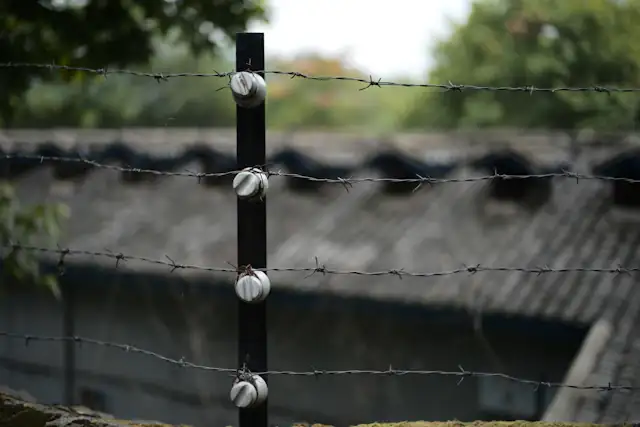
- Replace brittle or cracked insulators
- Proper joint connectors, not twisted wires
- Zoned energizer so faults are localised
See fence alarm fault and electric fence repair.
04Frequently asked questions
Why does my electric fence alarm go off at night?
Often wind moving branches onto the wires, or animals. A walk of the line in daylight usually finds the spot.
How do I find a break in my fence?
Technicians use fault finders and zone readings to locate breaks quickly.
Can I twist broken wires back together?
Twisted joints corrode and arc. Proper joint connectors should be used.