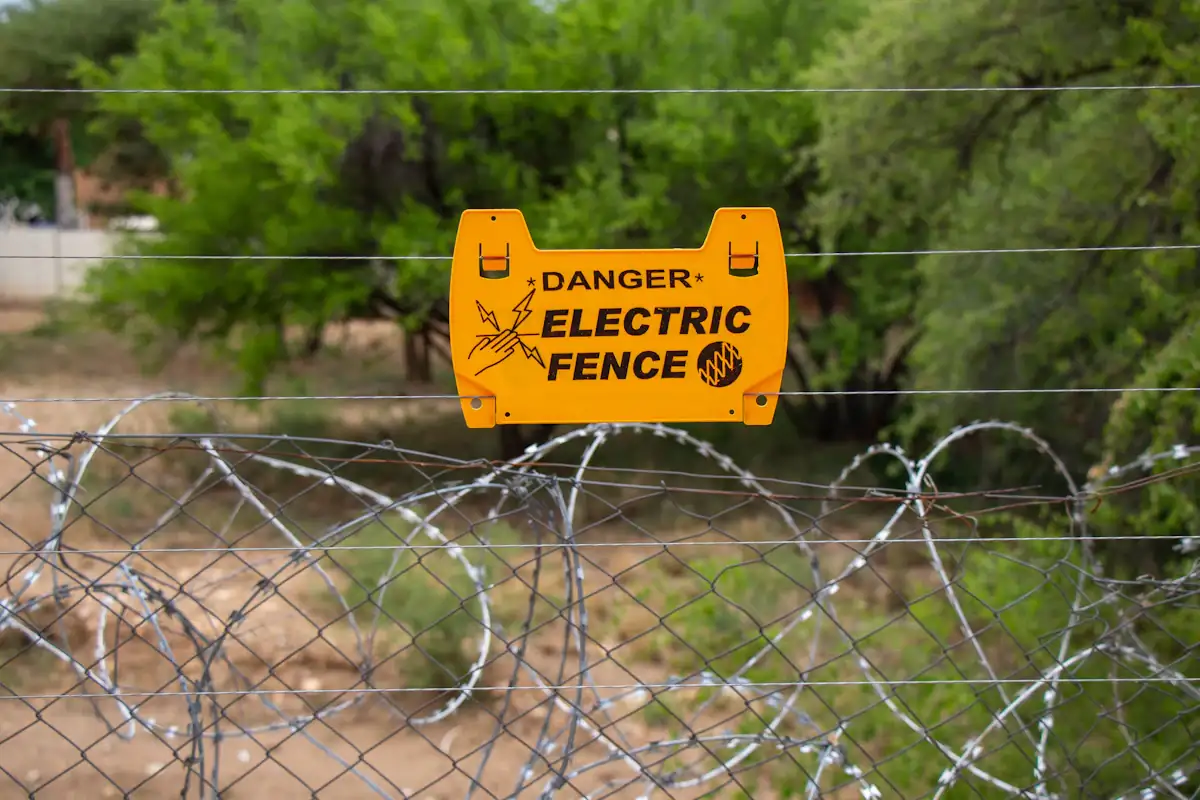
An electric fence energizer sends short high-voltage pulses, roughly once a second, down the live wires. When someone touches a live wire and an earth wire (or the ground), the pulse completes the circuit: painful but short. Monitored energizers also watch the fence voltage and sound an alarm if wires are cut, shorted or earthed.
Key takeaways
- Short pulses, not continuous current.
- Earthing is half the system: a poor earth means a weak fence.
- Monitored energizers raise alarms on cuts and shorts.
- Zones tell you where on the boundary the problem is.
- Never work on a live fence.
01How the circuit works
02The parts

03Deterrent and detector
A good electric fence does two jobs: it deters (people see it and avoid it) and it detects (the alarm tells you someone tried). Splitting a long fence into zones tells you where.
04Frequently asked questions
Can an electric fence kill?
A correctly installed security energizer delivers short, limited-energy pulses designed not to be lethal. Faulty or non-standard equipment is dangerous, so use proper energizers and installers.
Does an electric fence work in a power cut?
Yes, with battery backup. Many energizers have or support a backup battery.
Why is my fence voltage low?
Commonly vegetation touching wires, poor earthing, broken insulators or a failing energizer.