Access Control for Schools in Kenya
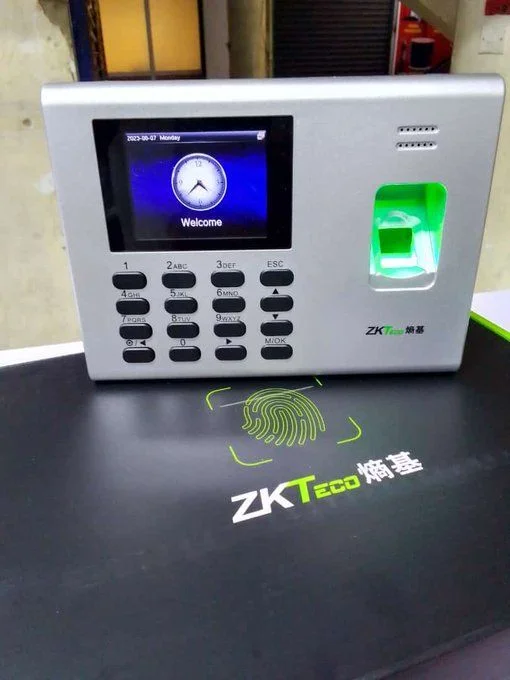
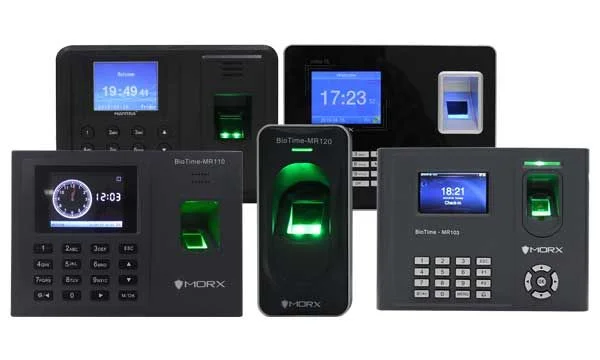
Staff doors, administration blocks, exam stores, boarding houses and gates — controlled by biometric, card or PIN readers, with visitor management and staff attendance in the same system.
Security
CCTV InstallationAccess ControlBiometrics & AttendanceElectric FencingAutomatic GatesFire Alarm SystemsSecurity Guards & K9Power & Electrical
Solar InstallationSolar & Power BackupElectrical InstallationSmart Home AutomationBuilding Management (BMS)IT & Networking
Networking & Wi-FiIT SupportCyber SecuritySystem IntegrationIntercom SystemsPA SystemsPOS SystemsQueue ManagementStaff doors, administration blocks, exam stores, boarding houses and gates — controlled by biometric, card or PIN readers, with visitor management and staff attendance in the same system.
Qyvea Limited installs access control in Kenyan schools so that staff, students and visitors only enter the doors and gates they are authorised to use. It typically covers the staff room, administration block, bursar's office, exam stores, server and IT rooms, boarding houses, science labs and any door the school does not want left open. The main gate stays under the control of a receptionist, security lead or gateman, using an intercom and a release button rather than a key.
Intercom plus electric release, controlled from reception or the guardhouse.
Staff-only access on the admin entrance. Visitors are admitted only when accompanied.
Higher-assurance access, often with two-person rule or audit trail for exam papers and cash.
Matron and dorm masters access, with controlled student entry where schools want it.
Restricted to teachers and lab technicians, with time-of-day rules.
Strictly limited access. Paired with school CCTV for full visibility.
Privacy considerations are discussed during the site survey. Schools make the final call on which reader goes on which door.
We walk the campus and list every door and gate the school wants controlled.
Reader type per door, locks, cabling, controller and software are itemised.
Doors are fitted, wired and tested. Work is scheduled around school hours.
Staff enrolled, rules loaded, administrators trained on the software.
In a school, access control means staff, students and visitors can only enter the doors and gates they are authorised to use. It typically covers staff doors, administration block, exam stores, server rooms, boarding houses and staff-only areas, with the main gate handled by a controlled entry point or intercom.
For older students in secondary schools and colleges, biometric access to hostels, labs and libraries is practical. For younger students, card or fob access is often simpler. Qyvea advises based on the school's age range, campus layout and privacy considerations.
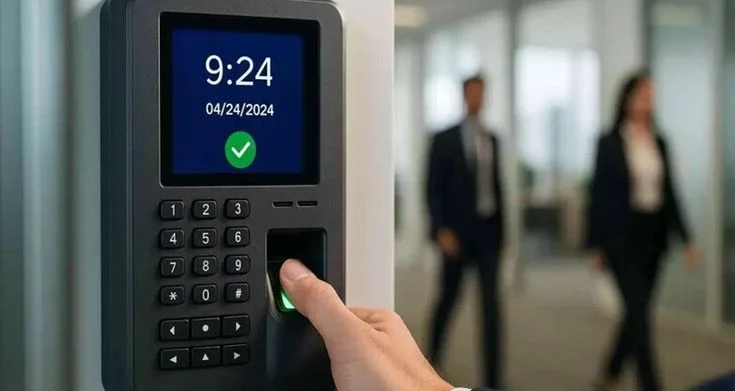
Yes. The same biometric terminals used for staff room access can record teaching and support staff clock-in and clock-out. Reports export to payroll. See our time attendance page for detail.
Visitors report to reception or the gate. Reception uses an intercom or access-controlled gate to admit them, and logs name, ID and purpose in the visitor register. Some schools pair this with a visitor badge or photo record.
Cost depends on how many doors and gates are covered, whether biometric or card readers are used, whether doors need electric locks or turnstiles, and whether the system integrates with CCTV. Qyvea provides a free site survey and itemised quote.
Yes. Qyvea is a Nairobi-based, delivery-only supplier, and installs across Kenya including Mombasa, Kisumu, Nakuru, Eldoret, Thika, Ruiru and Kiambu.
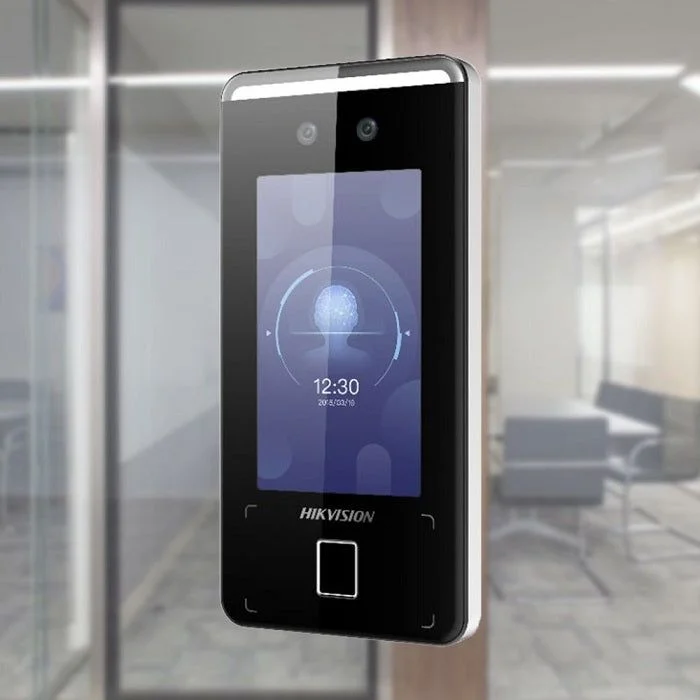
A fully touch-free door: staff enter with Hikvision face recognition and leave by waving a hand over an infrared no-touch exit button.
Free campus walk-through and itemised quote. We can usually schedule within the same week.