On this page
01. How the parts connect02. What each part does03. Before automating a gate04. See it in a real installation05. FAQ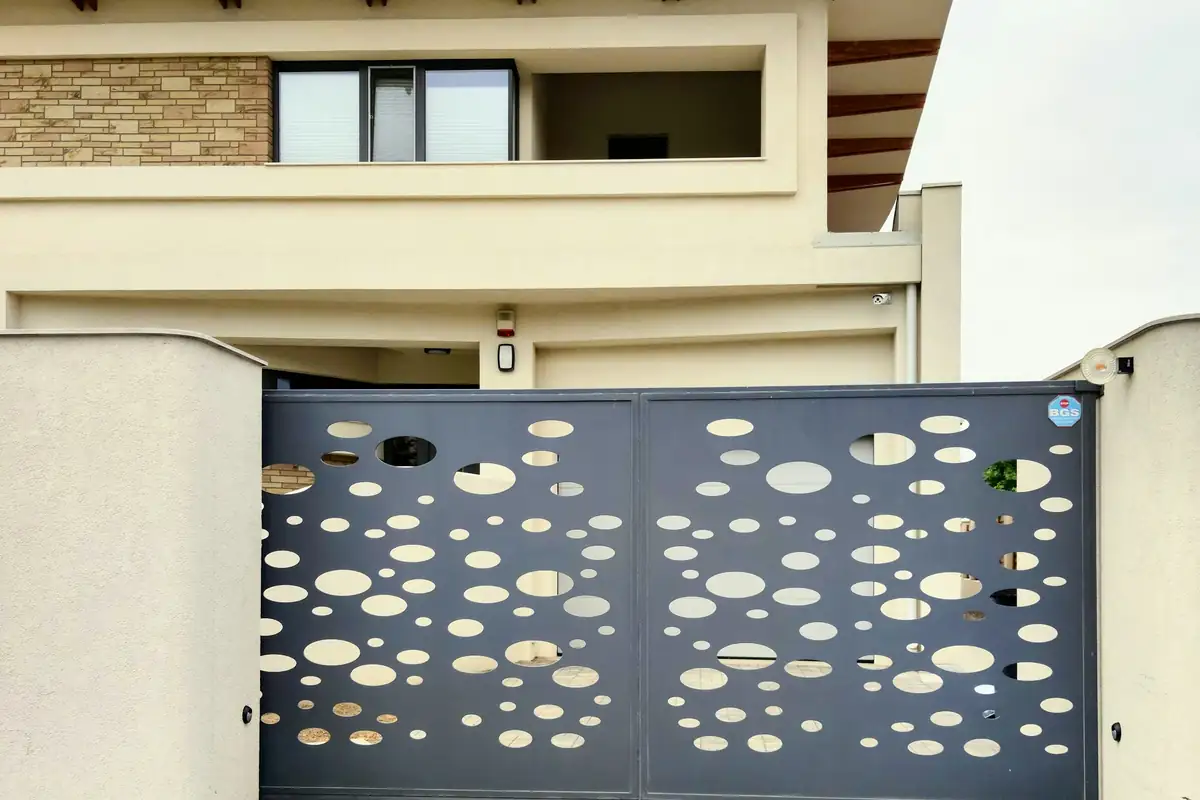
An automatic gate has a motor that moves the gate, a controller that decides when and how far it moves, limits that tell it where open and closed are, a battery that keeps it working in power cuts, and safety devices that stop it closing on a car or person. Remotes, keypads, GSM units or access control tell the controller when to open.
Key takeaways
- Motor + controller + limits + battery + safety devices.
- The battery, charged from mains (or solar), keeps the gate working in outages.
- Safety beams are essential, not optional.
- Every gate needs a manual release for emergencies.
- The gate itself must run smoothly before any motor is fitted.
01How the parts connect
02What each part does
03Before automating a gate
- Does the gate move freely by hand? A stiff gate will burn out any motor
- Is the track straight and clean (sliding) or are hinges sound (swing)?
- Is there space for the gate to open fully?
- Where will power come from?
- Who needs to open it: residents, visitors, deliveries?
Choose the motor with the gate motor selection guide and compare sliding vs swing gates.
04See it in a real installation
Sliding & Swing Gate Automation
Both kinds of automatic gate in action: a sliding gate running along its track and a swing gate opening on its arms, each driven by its own motor.
05Frequently asked questions
Do automatic gates work during power cuts?
Yes, with a battery. The motor runs from the battery, which is charged from mains or solar.
What stops the gate closing on my car?
Safety beams across the opening detect the car and stop or reverse the gate.
Can I open the gate if the motor fails?
Yes. Every automatic gate should have a manual release so it can be moved by hand.